I work on video understanding — mostly on what a model should
hold on to from a long video, and how much of it can be worked out
while the video is still playing rather than after the fact. Most of
my thesis has gone into the streaming version of that, in egocentric
procedural video: cooking, assembly, lab protocols, where you get one
frame at a time, no future context and no second pass. That rules out
most of what the field currently does well.
VidParse
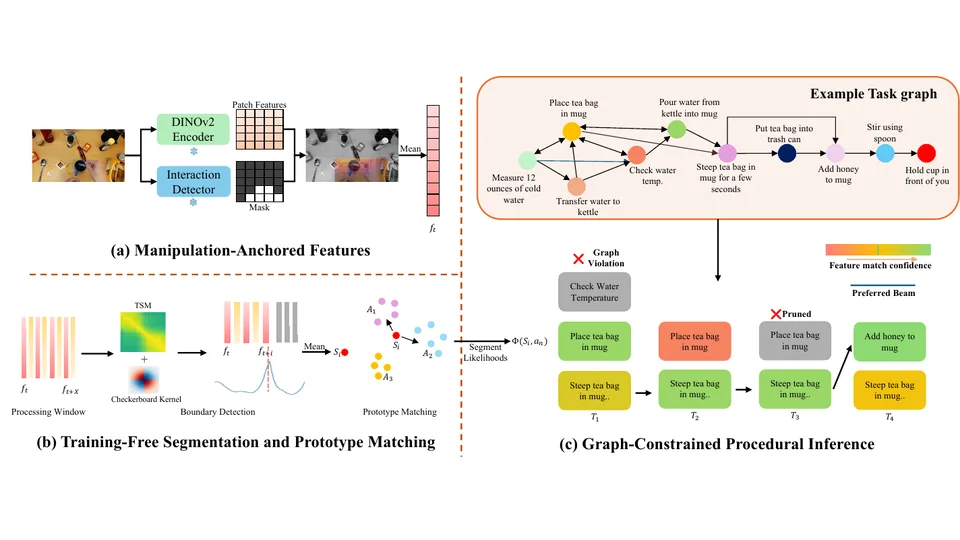
(ECCV 2026) does it without training anything. It segments the video
using features anchored in hand–object interaction, then decodes
the sequence of steps with a beam search that can only follow
transitions the task graph permits. Everything runs off frozen
foundation models, and on multi-step parsing it beats trained online
baselines by up to 10×.
The task graph is the weak part: VidParse has to commit to one up
front. What I’m working on now is using a VLM to build a
hierarchical memory in a single streaming pass, structured so that
different questions can be answered from it later.
Earlier work was about what learned representations already encode.
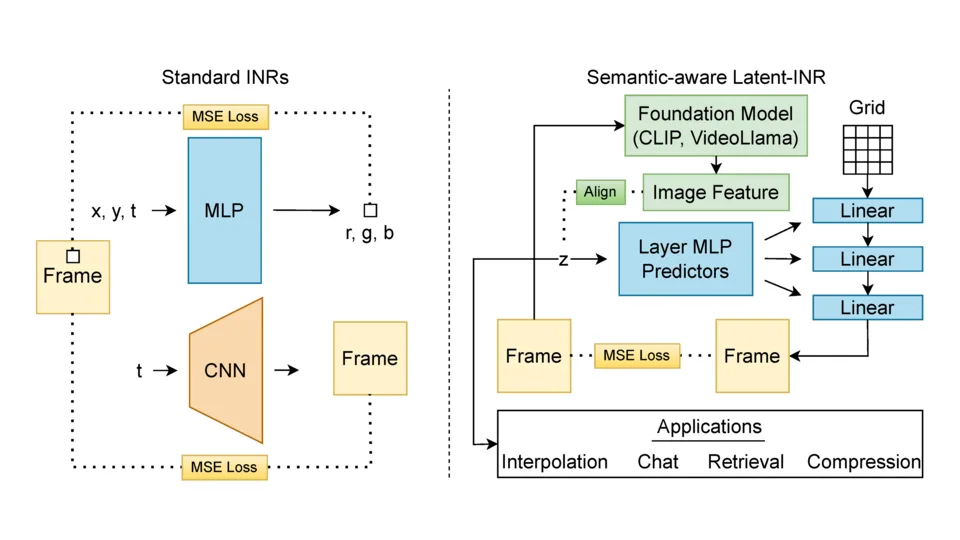
Latent-INR
found discriminative semantics inside implicit neural representations
of video, which were supposed to be doing reconstruction.
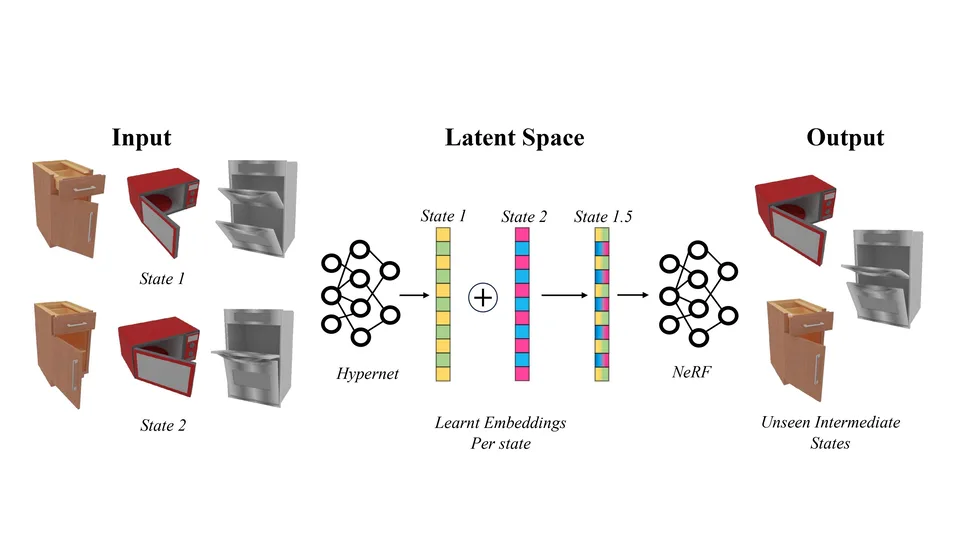
LEIA learned
articulation latents that survive a change of viewpoint.
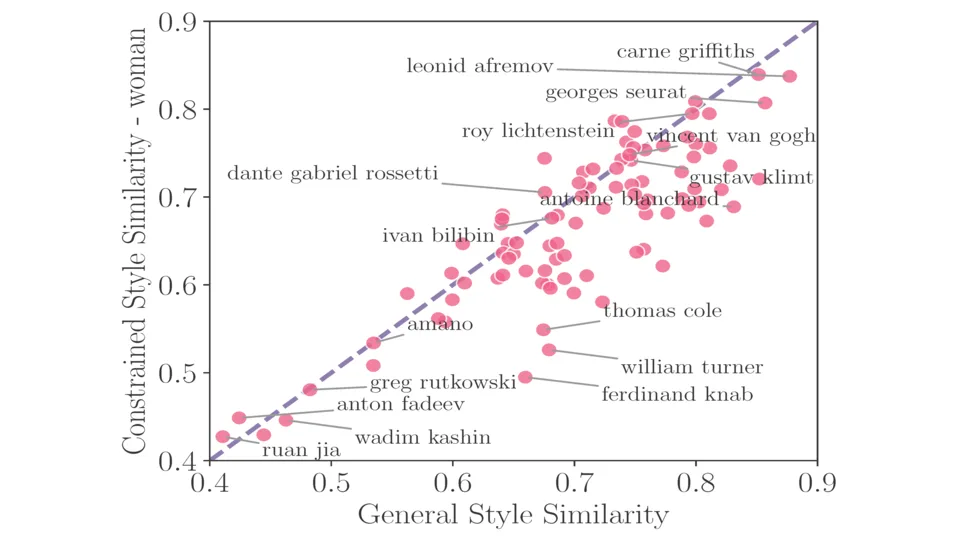
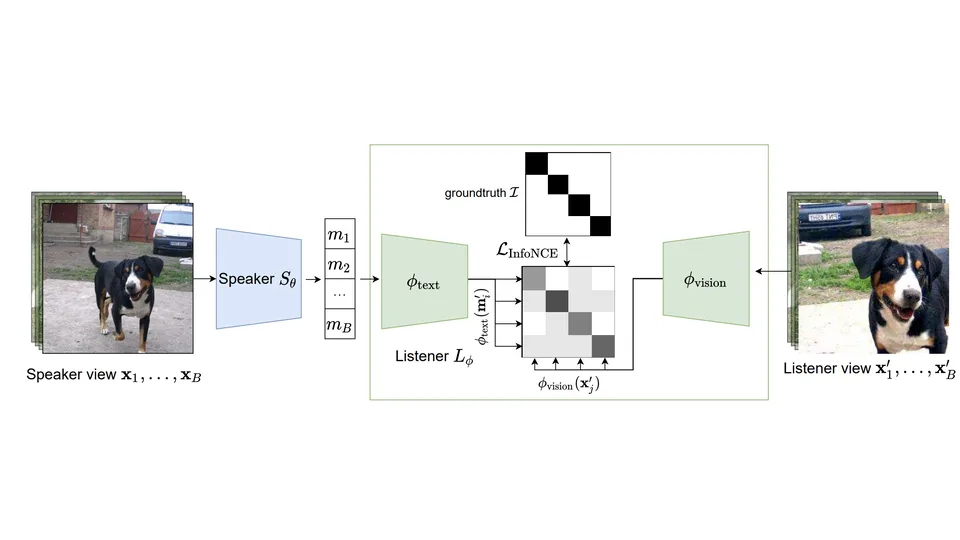
CSD made style a
measurable, separable property of diffusion output.
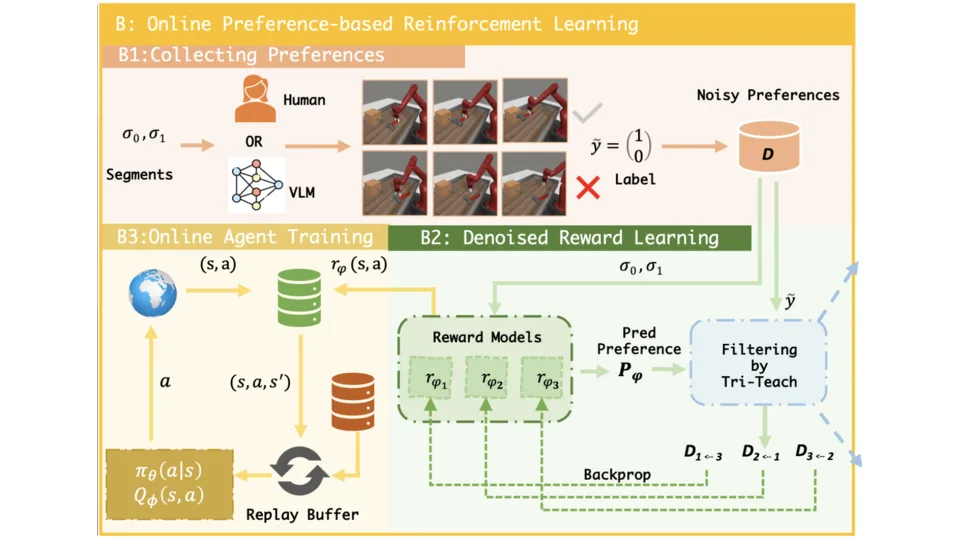
TREND, from a robotics collaboration, is
preference-based RL that holds up when the preferences — human or
VLM — are noisy.
I spent eight years in industry before the PhD: analyst work at a few
banks, then computer vision for automotive safety at Netradyne and
geospatial ML at Swiggy, plus four summers at Amazon during it.
The direction I am trying to pull these threads toward is robotics and
continual learning: systems that keep learning from what they watch,
instead of being trained once and then frozen.
Video understanding
Egocentric & procedural video
Representation learning
Vision–language models